The Tool Culinary Shamans Use
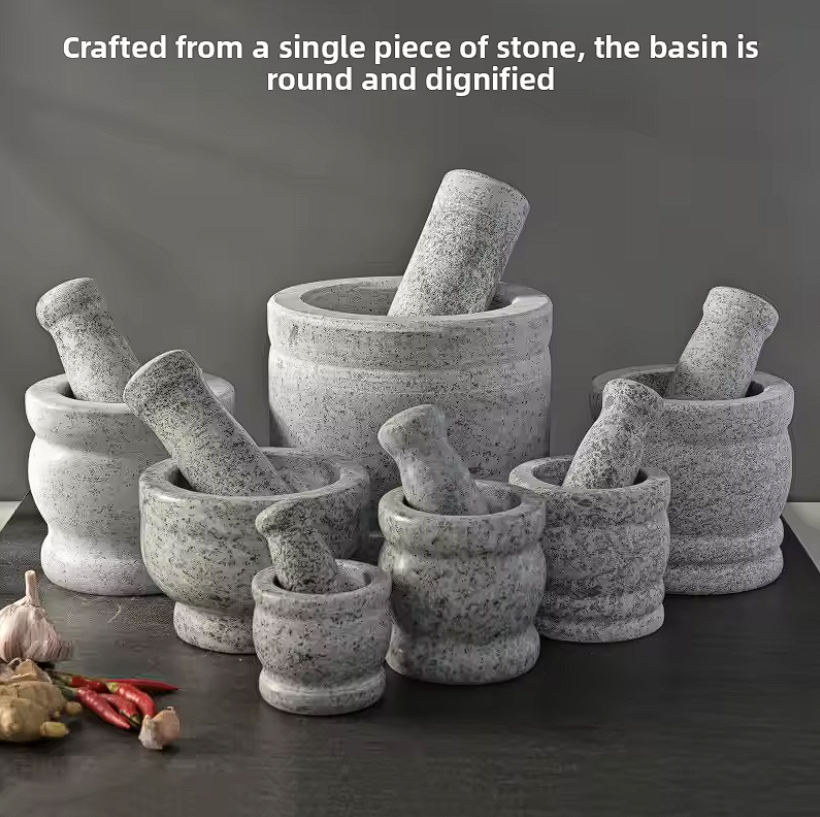
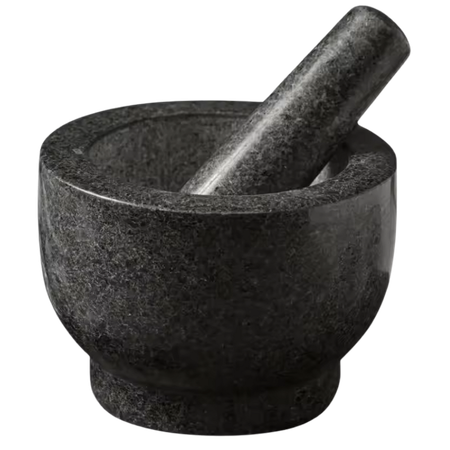
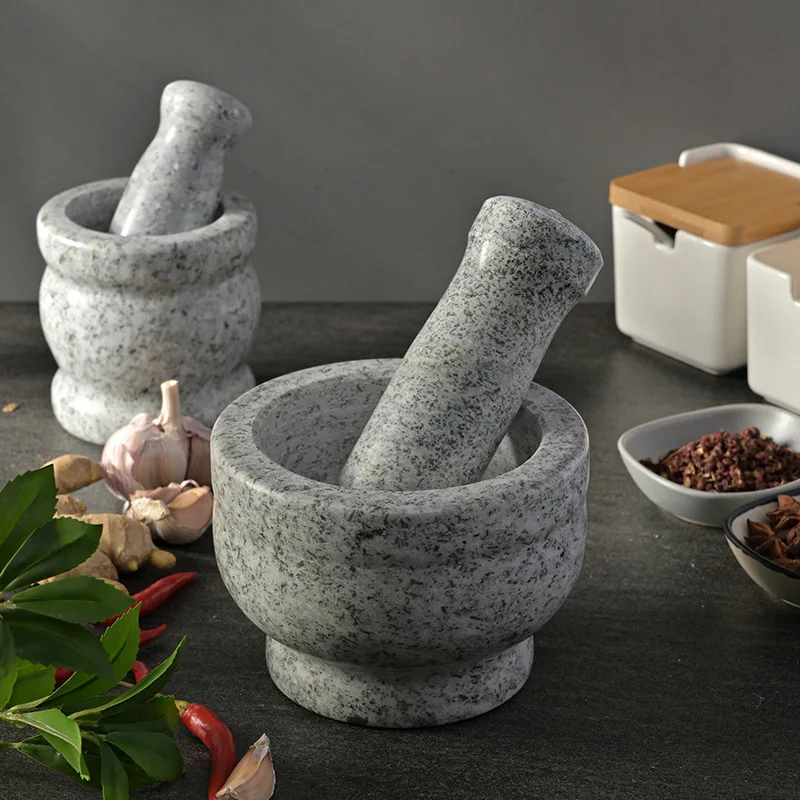
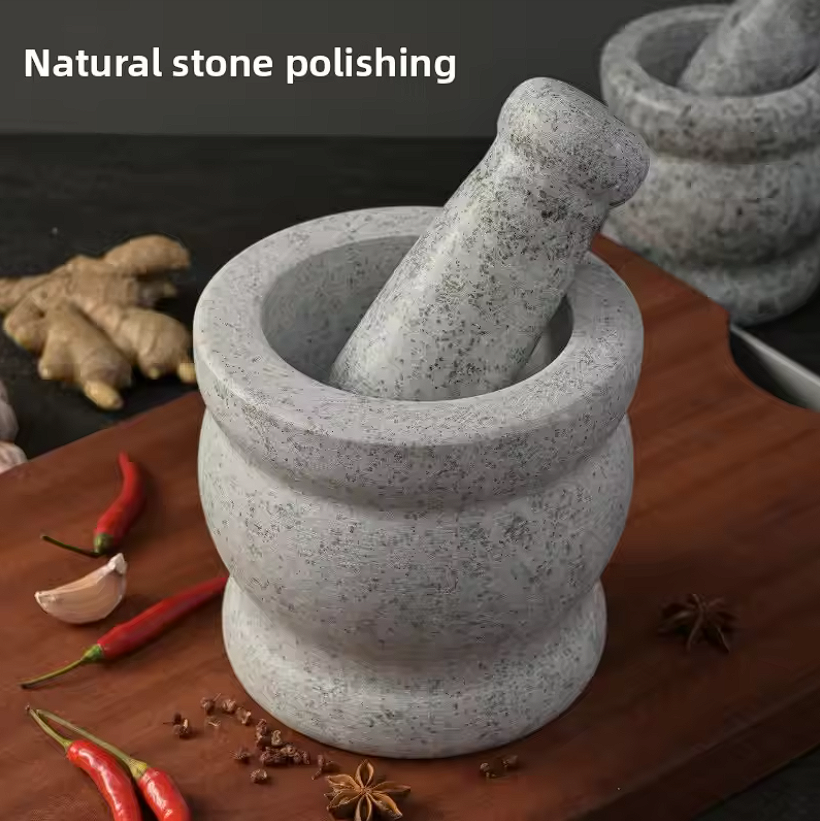
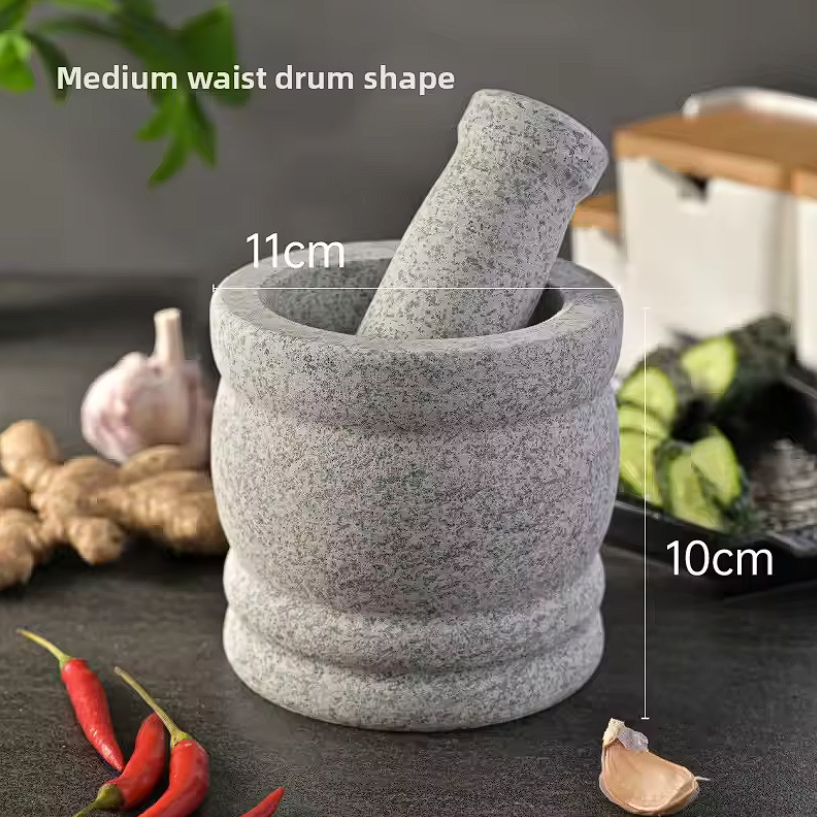
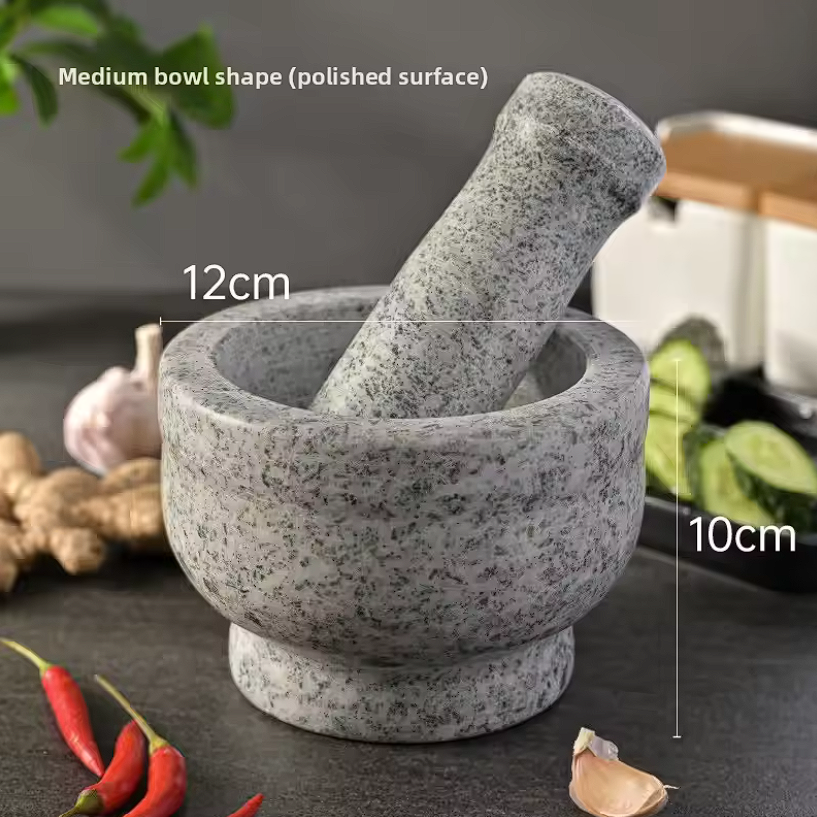
A Natural Stone Garlic Crusher Mortar & Pestle Set is a traditional stone grinding tool consisting of a heavy bowl (mortar) and a matching handheld crusher (pestle), typically made from natural granite, marble, or similar dense stone.
Marketed specifically for crushing garlic as well as grinding spices and herbs, these sets feature a textured or unpolished interior that provides the friction needed to break down fibrous cloves, whole seeds, dried leaves, roots, and nuts into pastes or fine powders. The substantial weight keeps the mortar stable on the counter during use, while the solid stone construction is durable, non-reactive in most cases, and free of plastic or synthetic coatings. Common applications include making garlic paste, fresh herb pastes, spice blends, pesto, guacamole, and small-batch medicinal preparations. Many versions are easy to clean with a rinse and wipe once seasoned, and they double as both functional tools and attractive kitchen pieces. Capacities often range from roughly 1–2 cups, suitable for everyday cooking or modest herbal batches.
This is the classic stone-on-stone method used for millennia across cultures for both culinary and medicinal preparation.
This Is One of the Most Specialized and Useful Tools For A Medicinal, Culinary Shaman’s Work (And A Kitchen Must-Have)
In practices where food and medicine remain intertwined, where a practitioner selects, prepares, and transforms plants with attention to both flavor and effect, the method of preparation is never neutral. The natural stone mortar and pestle occupies a uniquely specialized place because it does not merely process ingredients; it engages the practitioner directly in the release of their essential qualities.
Stone grinding is a form of controlled mechanical extraction. The friction and pressure of pestle against mortar rupture cell walls and liberate volatile oils, aromatic compounds, and other constituents more thoroughly and gently than many high-speed electric grinders, which can generate heat and potentially degrade delicate molecules. For a culinary shaman or herbalist working with garlic, fresh herbs, spices, or medicinal roots, this means fuller aroma, deeper flavor, and, in traditional frameworks, more complete access to the plant’s properties. The process is deliberate and sensory: the practitioner feels the resistance of the material, hears the changing texture, and smells the oils as they emerge. That sensory feedback becomes part of the work itself, allowing real-time adjustment of pressure, timing, and degree of fineness according to the needs of a particular formula or dish.
The Material Matters
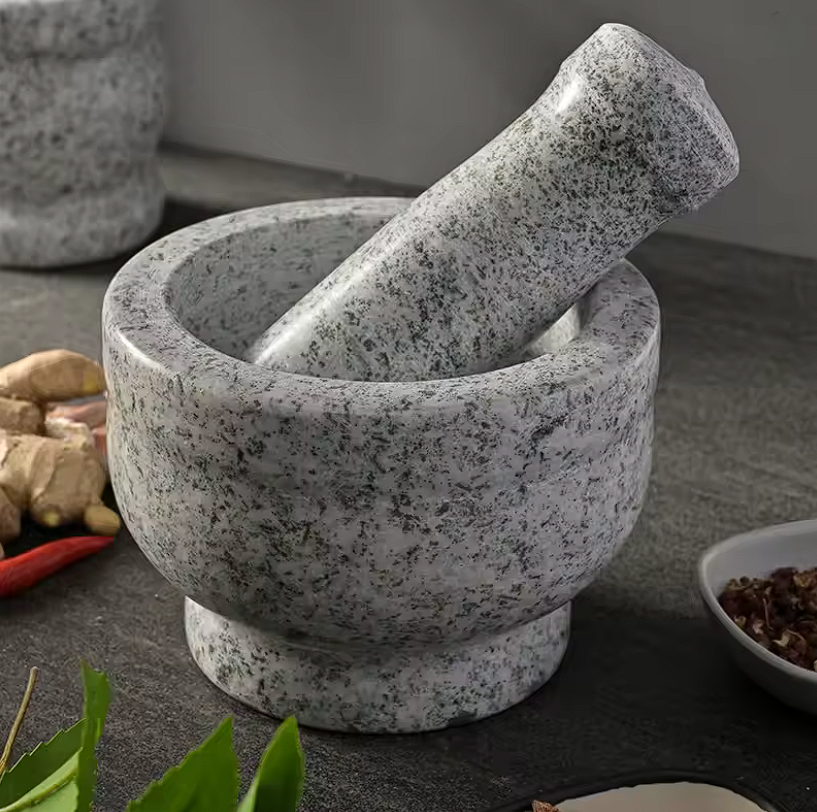
Natural stone (especially granite) is chemically stable and does not introduce metallic ions or plastic residues. In traditional systems such as Ayurveda, where the khalva yantra (mortar and pestle) has long been essential for triturating herbs and preparing pastes and powders, stone vessels are valued precisely because they do not react with the substances being prepared. Similar preferences appear in historical apothecary practice and various folk traditions. For someone who treats the preparation of medicine and food as continuous with one another, this non-reactivity supports purity of the finished preparation, whether it is a garlic-herb paste destined for a restorative soup, a finely ground spice blend for a medicinal meal, or a small quantity of powdered herb for topical or internal use.
The tool is also specialized in its scale and control. Electric grinders excel at volume and speed; the mortar and pestle excels at small, intentional batches where the exact degree of crush or grind can be judged by hand. This suits the work of a medicinal cook who may need only a few cloves of garlic crushed with specific herbs, a precise amount of seeds reduced to a paste, or a single formula prepared fresh rather than stored in bulk. The same tool moves seamlessly between kitchen and apothecary functions, reinforcing the continuity between cooking and healing rather than separating them into different domains.
As a kitchen must-have, its value is both practical and qualitative. It produces noticeably better flavor in everyday dishes, garlic that tastes more rounded and aromatic, spices that release their full spectrum rather than simply being powdered, herbs that become integrated pastes instead of chopped fragments. It requires no electricity, has no blades to dull or motors to fail, and lasts for decades with basic care. Once seasoned, it becomes a dedicated vessel that carries the memory of previous preparations in subtle ways while remaining easy to clean between distinct uses. For anyone who cooks with whole spices, fresh aromatics, or medicinal plants on a regular basis, it reduces reliance on pre-ground, oxidized commercial powders and returns control over texture and freshness to the cook.
In short, the natural stone garlic crusher mortar and pestle set is specialized because it preserves the direct, material relationship between practitioner, plant, and process that many modern appliances obscure. It is useful because that relationship yields better flavor, cleaner extraction, and greater intentionality, whether the goal is a fragrant everyday sauce or a carefully prepared medicinal preparation. For the culinary shaman, it is not nostalgia; it is a precise and enduring instrument of transformation. For any serious kitchen, it is simply one of the few tools that consistently improves what it touches.