Don’t Waste The Potent Drops Trapped In Herbs And Fruit Stuff
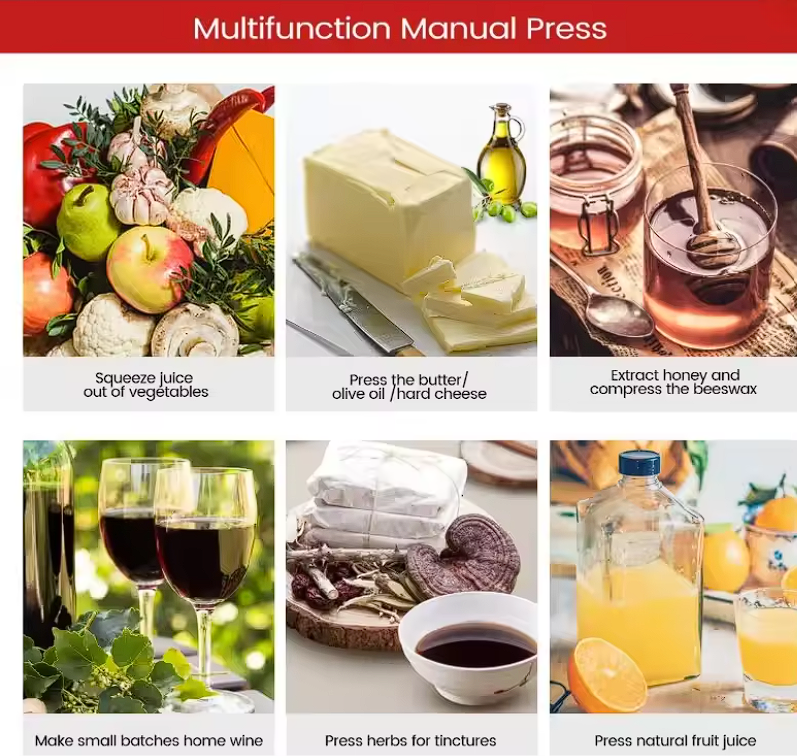
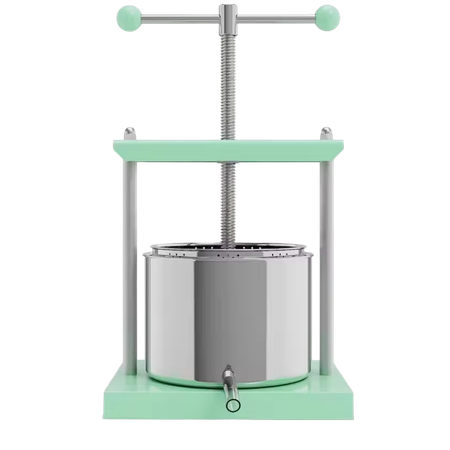
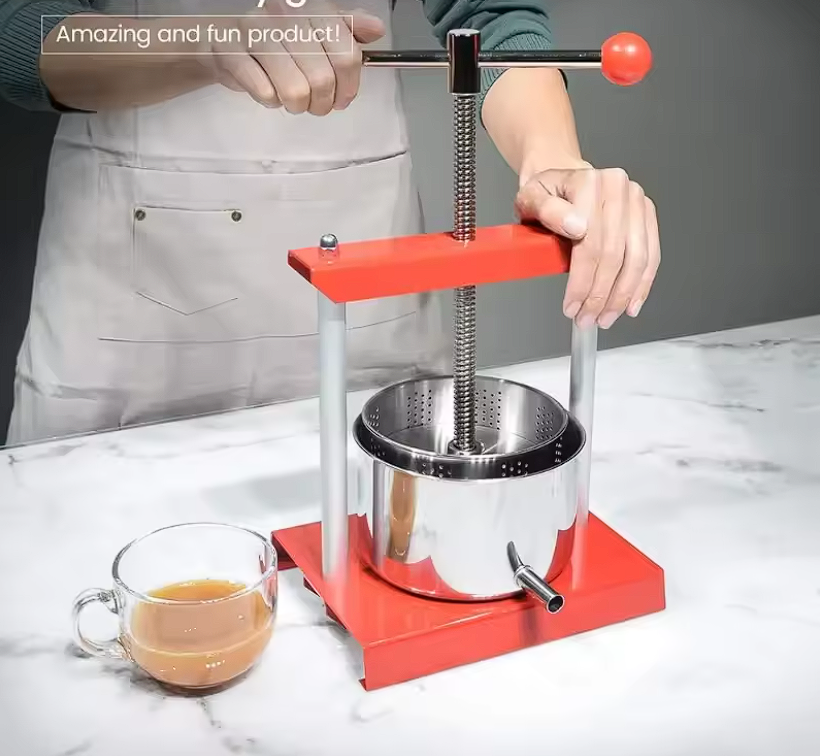
This Manual 0.8 Gallon Stainless Steel Barrel Press is a compact, hand-operated screw press designed for small-batch extraction. It features a roughly 3-liter (0.8-gallon) stainless-steel basket or dual-barrel system that holds pre-crushed material inside a filter bag. A T-shaped handle turns a threaded spindle, driving a plate downward to apply steady mechanical pressure. Liquid exits through a spout while solids remain behind. The unit is intended for soft fruits, vegetables, herb residues after maceration (tinctures), soft cheese, nut-milk bags, honey, and limited oil extraction such as from olives or seeds. It requires no electricity, generates minimal oxidation compared with high-speed juicers, and disassembles for cleaning. Ingredients generally need to be chopped or crushed first for efficient yield.
The design prioritizes pure physical separation: controlled pressure extracts liquid while the stainless-steel contact surfaces and filter bag keep the product free of added heat or mechanical aeration.
This Manual Press Serves A Culinary Shaman Well
A culinary shaman has reasons to extract the useful portions of plants and foods so they can be measured, preserved, and used. This 0.8-gallon manual press specializes in that final separation step. After herbs have macerated in alcohol or vinegar for a tincture, the press recovers the liquid that still clings to the plant material, raising total yield without introducing heat or high-speed oxidation that can degrade delicate constituents. The same action works on fruit and vegetable pulp for pure juices, on curds for cheese, or on oil-bearing soft materials when a filter bag is used. Because the operator controls the rate and force of the screw, the process remains deliberate: pressure can be increased gradually so the filter bag does not rupture and the liquid flows clear.
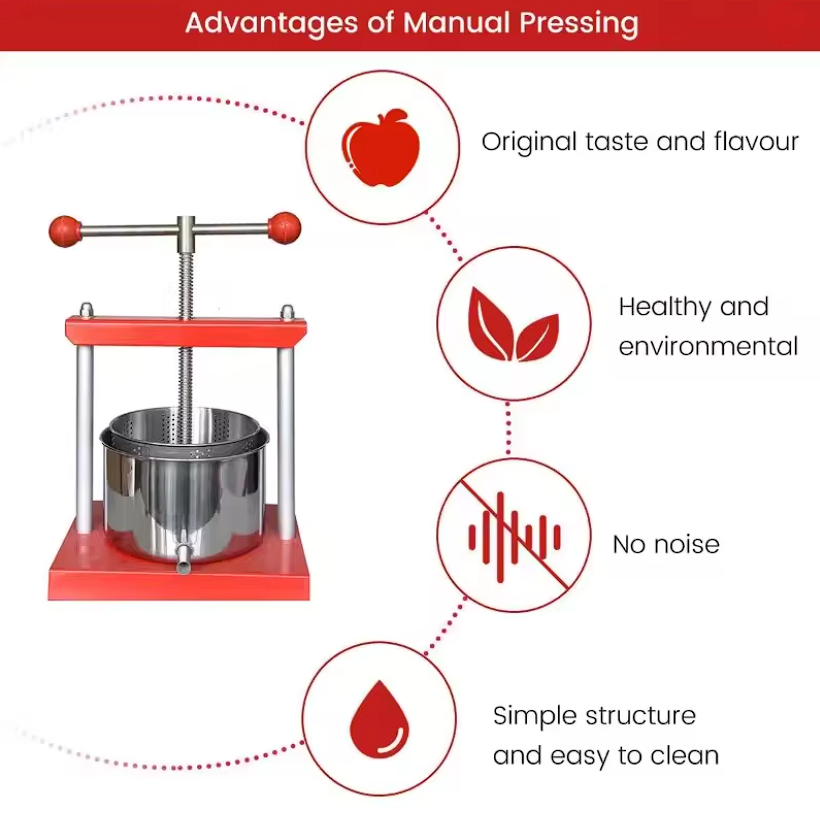
The capacity matches typical apothecary batches. A 0.8-gallon chamber handles the residue from a small jar of tincture, a modest harvest of soft fruit, or a home cheese make without requiring commercial-scale equipment. Stainless-steel barrels resist corrosion from acidic juices or alcohol and clean thoroughly, which matters when the same tool moves between culinary juices and medicinal extracts. The absence of electricity keeps the process quiet, portable, and free of motor heat, aligning with preferences for methods that protect volatile compounds.
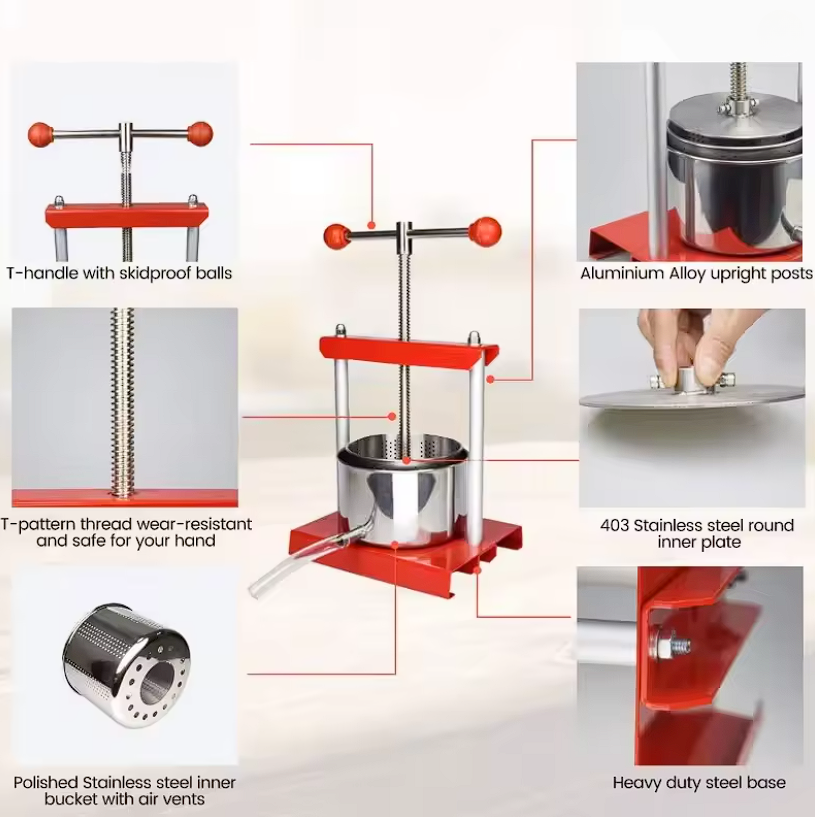
In the larger workflow the press closes a practical loop. Materials may first be dried in a dehydrator, ground or chopped, macerated or cooked, then pressed so the liquid or oil can be bottled, weighed on a precision scale, and stored. It complements rather than replaces a mortar and pestle or grinder: those tools prepare the material; the press finishes the extraction. For the practitioner who works with seasonal plants, small harvests, and formulas that demand high recovery of active liquid, the press supplies mechanical efficiency that hand-squeezing cannot match while preserving the integrity that high-speed electric methods can compromise.
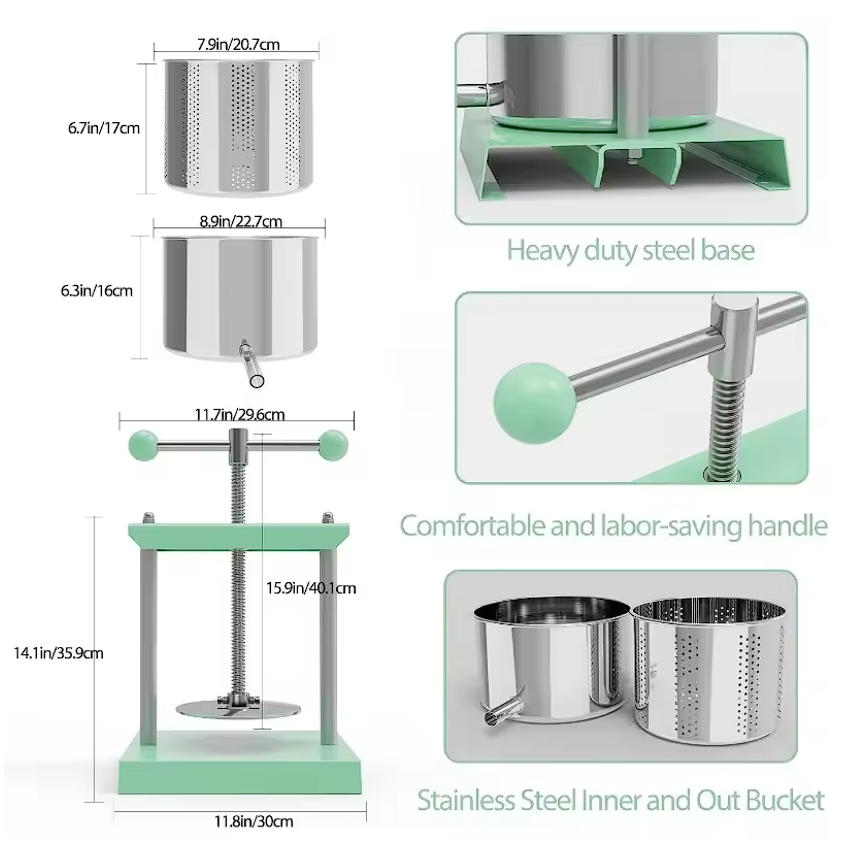
Limitations are clear and useful to know. The press is not suited to hard, dry, or whole unprepared materials; pre-crushing is required. Yield depends on proper bagging and gradual pressure. When those conditions are met, however, the tool becomes a reliable station in the apothecary: it turns spent plant matter back into usable liquid and turns soft foods into pure, additive-free extracts. In that role it is specialized: Engineered for controlled, low-oxidation recovery of liquids from plant and dairy materials, and useful, because that recovery multiplies the value of every batch the culinary shaman’s kitchen apothecary prepares.