
Capture The Living Character Of Every Plant
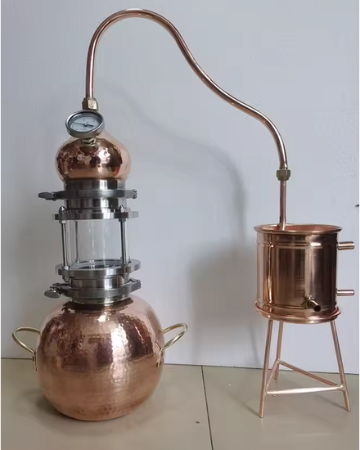
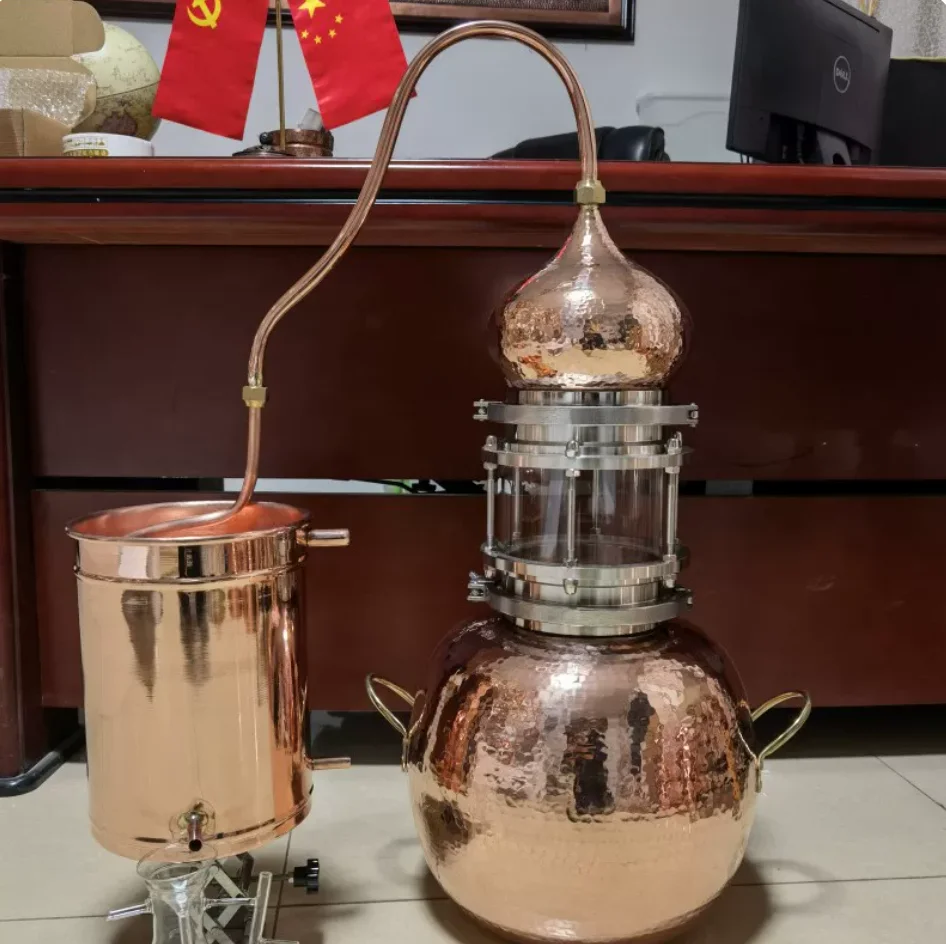
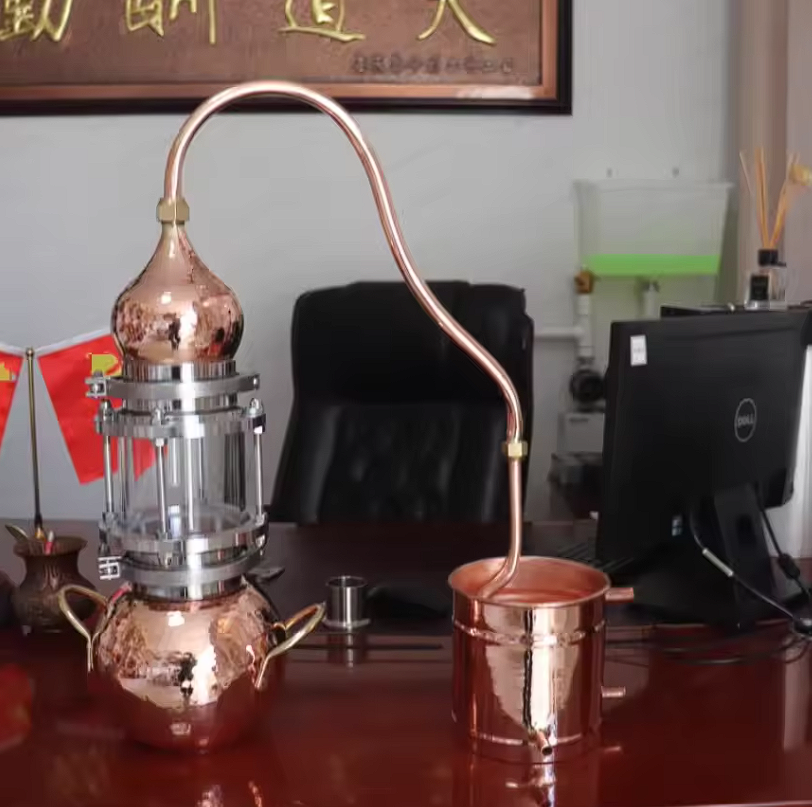
This is a compact copper alembic still, usually in the 2- to 5-liter range. It has a hammered copper pot, an onion or swan-neck head (often with a thermometer), a vapor tube, and a coil condenser that runs cool water through it. Pure copper conducts heat well and reacts with sulfur compounds that can give distillates an off smell, so the results tend to come out cleaner. People buy these kits mainly to steam, or hydro-distill plant material for essential oils and hydrosols (the fragrant waters that come off with the oil), or simply to make distilled water.
Legal note: Owning a still is generally fine in the United States and many other places. Distilling essential oils, hydrosols, or water does not require a special permit. Distilling alcohol for drinking without a federal Distilled Spirits Plant permit is illegal.
The copper body and classic shape are well suited to gentle vapor separation of volatile plant compounds.
Why It Earns A Place In A Culinary Shaman’s Kitchen Apothecary
A culinary shaman’s work often centers on the volatile parts of plants and the aromas and compounds that give them their character. This small copper still is one of the better tools for drawing those compounds out cleanly. You load the pot with fresh or dried botanicals (lavender, rosemary, rose petals, citrus peel) and water, apply steady low heat, and collect what comes over. The copper surface helps strip sulfur notes, so the essential oil and the hydrosol both stay closer to the plant’s true scent and character than many other extraction methods. The hydrosol can go straight into a double boiler or be diluted for dropper bottles; any oil you separate becomes a concentrated fraction you can measure precisely on a digital scale.
Because the still is small and traditional in design, it fits a normal countertop and suits the modest batch sizes of a home apothecary. After the run you can transfer the distillate through funnels and fine strainers into light-blocking jars or amber dropper bottles, then vacuum-seal it for storage. The same setup will also make pure distilled water for rinsing gear or for delicate infusions. In the overall workflow it fills a specific gap: it turns plant material that the scissors, grater, dehydrator, and grinder have already prepared into two refined products, oil and hydrosol, whose character is now separated and ready to use.
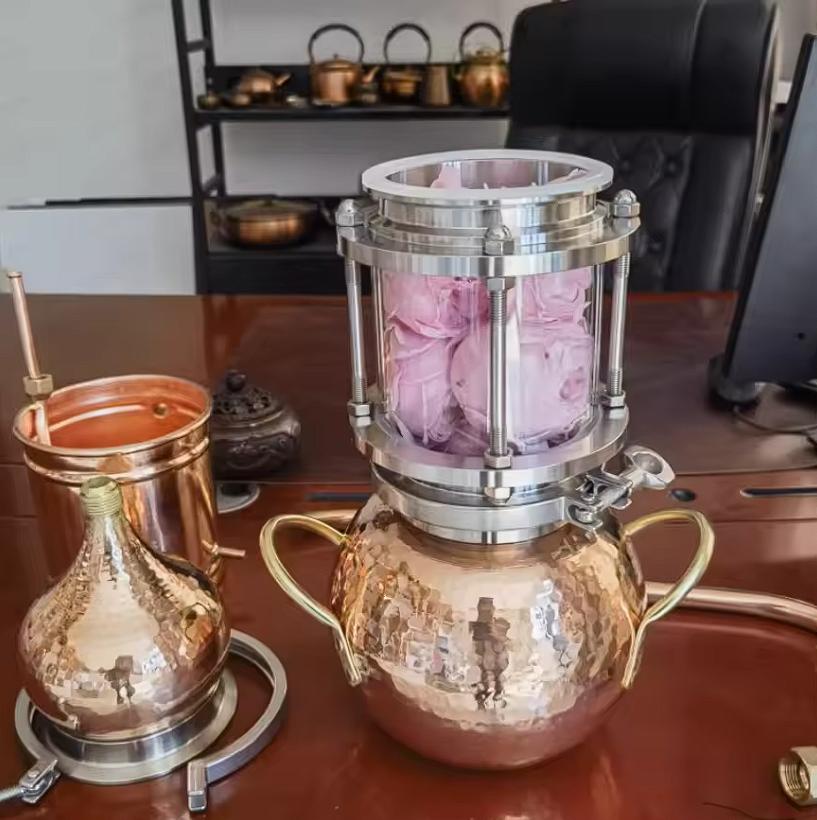
For someone who wants to capture volatile plant compounds cleanly and within the law, this pure copper still kit (used for essential oils, hydrosols, and distilled water) is a practical and necessary piece of equipment. It is precise, traditional, and immediately useful, as long as you stay on the right side of the regulations. Always check your local and federal rules before you fire it up.