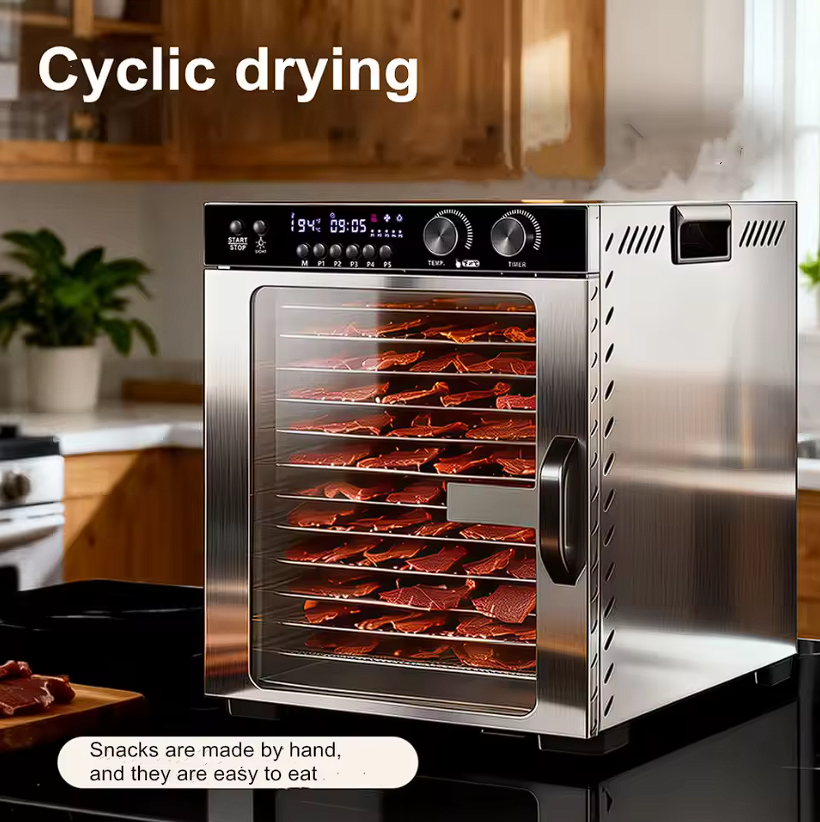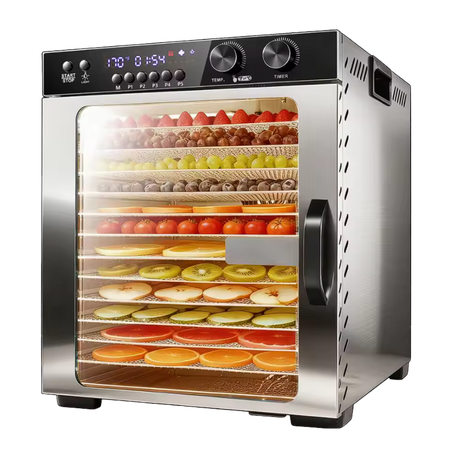
An Electric Fryer Designed For Home Use
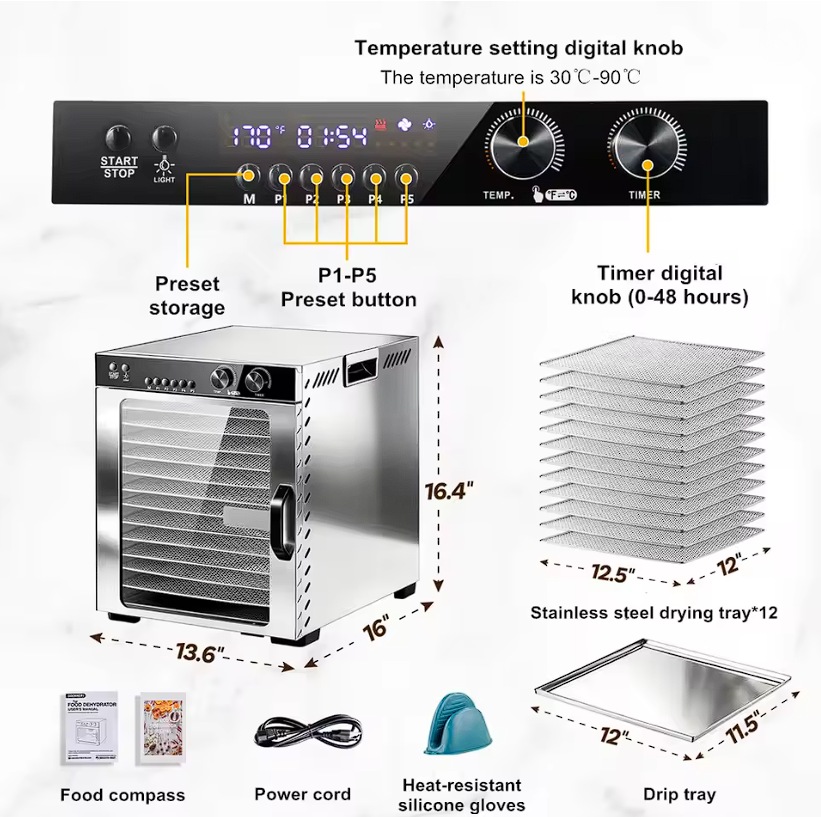
It holds up to 12 trays (commonly stainless steel or BPA-free materials) and uses circulating warm air with an adjustable timer and temperature controls to remove moisture from foods. Typical features include a temperature range suitable for delicate items through denser ones (often roughly 68–194°F / 20–90°C), a timer that runs for many hours with automatic shut-off, even horizontal airflow for consistent results across trays, and a relatively compact cabinet footprint for countertop or home kitchen placement. It processes jerky, sliced fruits, vegetables, herbs, mushrooms, and similar items into shelf-stable forms while aiming to retain flavor and nutrients better than high-heat methods. BPA-free construction supports food-contact safety.
The design prioritizes capacity and control: multiple trays let a user dry a substantial harvest or batch in one cycle, while precise temperature and time settings prevent under- or over-drying.
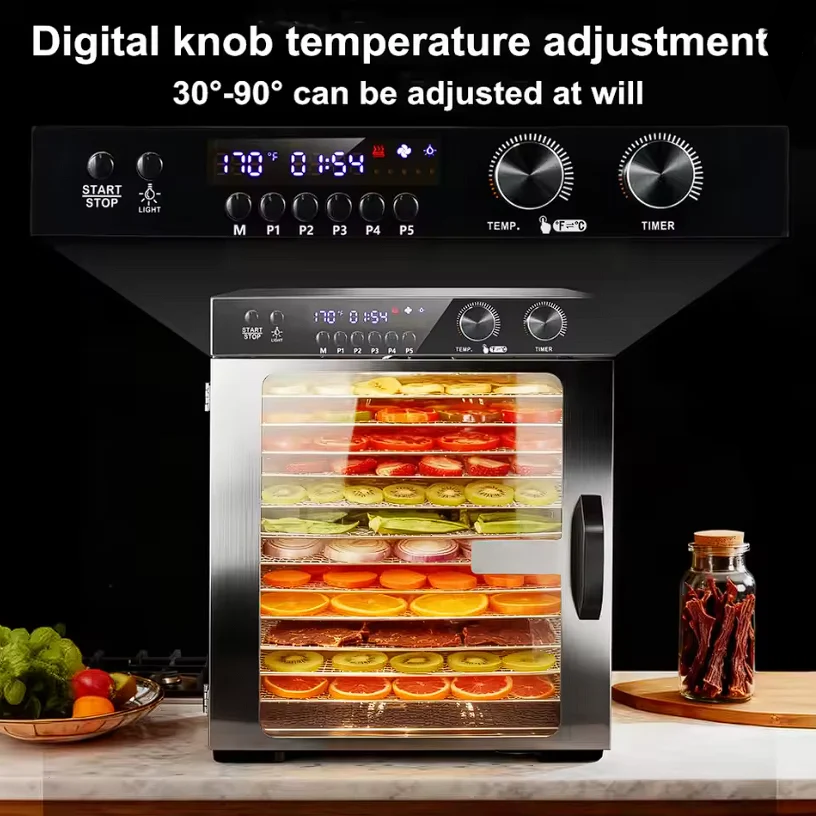
This Dehydrator Stands Out For Use In A Kitchen Apothecary
A medicinal culinary practice treats plants, fruits, and animal foods as materials whose qualities must be preserved through careful transformation. The 12-tier dehydrator specializes in that work because it applies steady, controlled low-to-moderate heat and airflow rather than the uncontrolled temperatures of an oven or the unpredictability of air-drying. Practitioners set temperatures low enough (commonly in the 95–115°F range for leaves) to draw moisture out while protecting volatile oils, aromatic compounds, and heat-sensitive constituents that higher heat destroys. The result is dried herbs that retain color, scent, and potency instead of turning into flavorless dust; fruit and vegetable slices that keep concentrated nutrition; and meats prepared into jerky that stores without additives.

The multi-tray capacity matches the rhythms of seasonal or foraged work. A single run processes a large harvest of garden herbs, wild greens, mushrooms, or surplus fruit before it spoils. Horizontal airflow and independent tray access produce even results without constant tray rotation, so the practitioner loads the machine, sets the parameters, and returns to finished material rather than tending a process for hours. The adjustable timer supports overnight or multi-hour cycles that match traditional slow-drying approaches while adding reliability and safety features such as auto shut-off.
In culinary-medicinal terms, dehydration extends the useful life of materials so they remain available beyond the fresh season. Dried herbs become the base for teas, spice blends, or later decoctions. Dried fruits and vegetables supply concentrated nutrients in compact form for travel, storage, or restorative foods. Properly prepared jerky offers dense, shelf-stable protein. Because the process concentrates rather than dilutes, small measured amounts later deliver more of the original plant’s character. The BPA-free, food-grade construction keeps the drying environment free of unwanted plastics during long heat exposure, aligning with preferences for clean vessels already seen in ceramic pots and stone tools.
As a kitchen tool it reduces waste, creates portable pantry staples, and gives consistent results that volume or oven methods rarely match. For the practitioner who moves between fresh preparation, grinding, precise weighing, and long-term storage, the dehydrator closes the loop: it captures the harvest at peak quality and returns it in a stable form ready for the next stage of culinary or medicinal use. In that sense it is specialized, tuned to the temperatures and scales that protect plant qualities, and useful, because those protected qualities become the foundation of work that continues long after the fresh material is gone.