The Decoction Vessel Culinary Shamans Trust To Protect Herbal Medicine
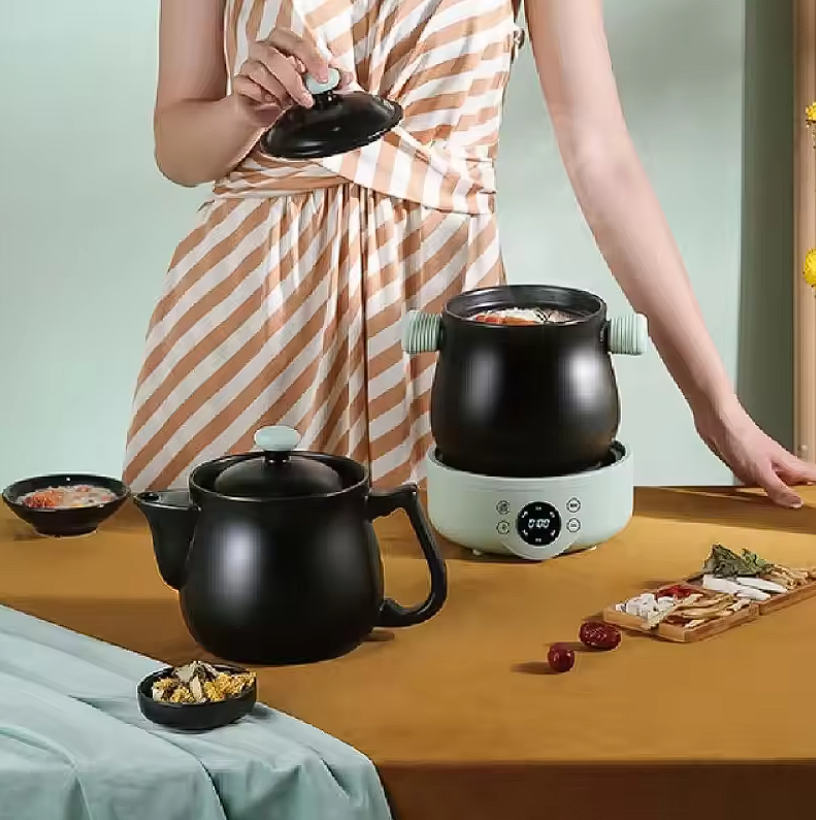
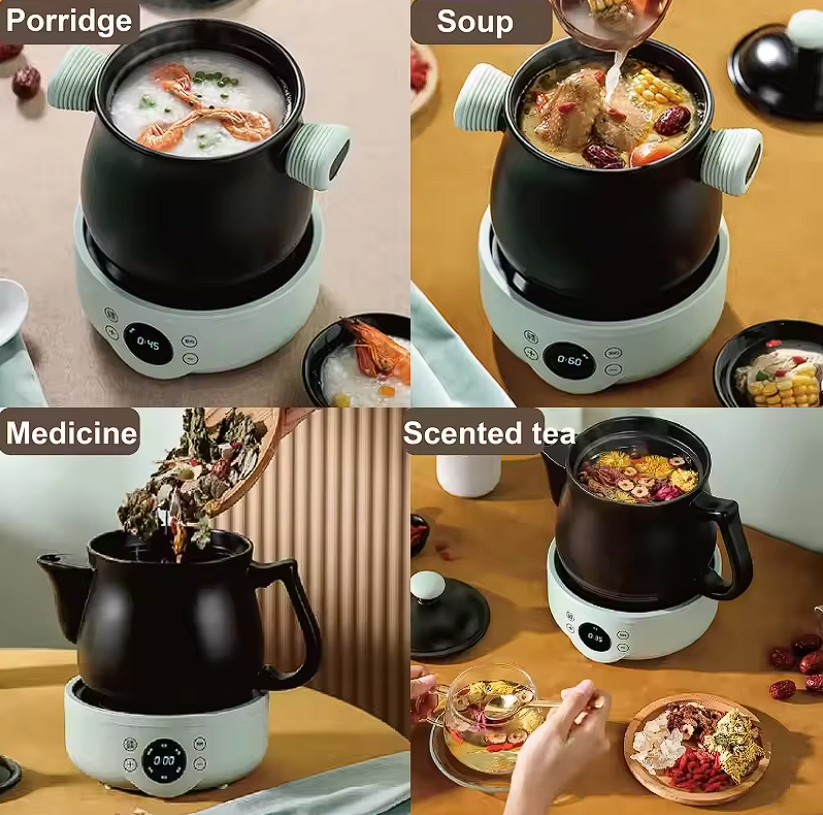
This multifunctional ,split ceramic health pot, is a compactly designed electric appliance for slow stewing, soups, porridge (congee), casseroles, keep-warm service, and herbal decoctions.

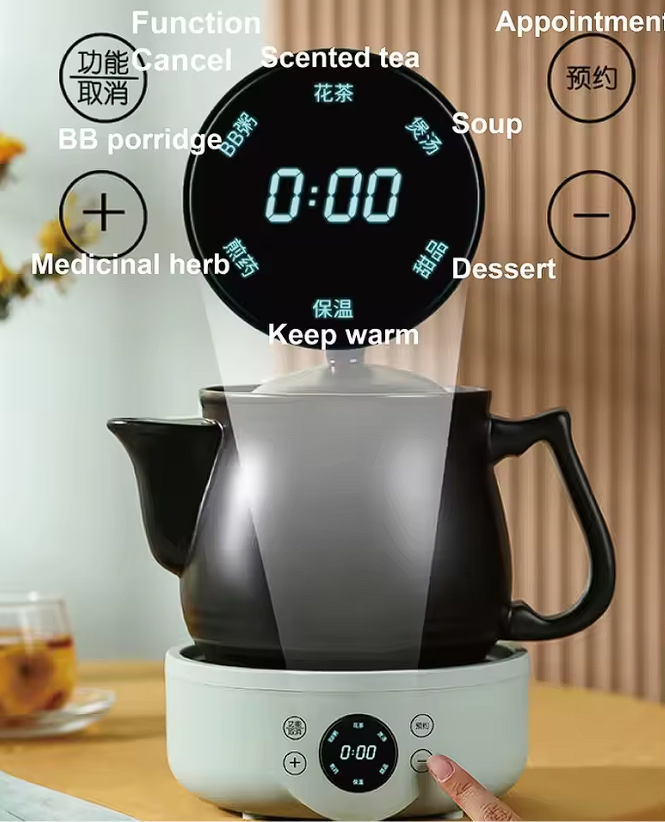
Centered on a removable 1.8-liter ceramic vessel, it sits on a separate electric heating base, the classic “split” design. The ceramic (typically high-fired, food-grade material) provides even, gentle heat distribution without the reactivity of many metals. Common features across matching products include appointment/reservation timers (often up to 12 hours), automatic keep-warm after the cooking cycle, dry-burn protection, and simple controls for soup, stew, porridge, or decoction modes. Capacity suits personal or small-household batches. Voltage is frequently 220V (with dual-voltage or adapter options available on some listings). The overall profile is low-wattage and quiet, favoring long, controlled simmering over rapid boiling.
These pots descend from traditional Chinese clay and ceramic vessels used for both everyday cooking and Traditional Chinese Medicine (TCM) preparations. The split design makes cleaning and pouring straightforward while keeping electronics dry and separate from the medicinal or culinary contents.
This Appliance Is Unusually Specialized And Useful For Medicinal-Culinary Work
In traditions where food and medicine are not sharply divided, where a practitioner prepares tonifying broths, herbal decoctions, restorative porridges, and ritual or seasonal dishes with equal attention to material, heat, and intention, the vessel is not a neutral container. It is part of the process of transformation. The 1.8L electric ceramic stew pot occupies a precise niche between older clay pots and modern convenience appliances.
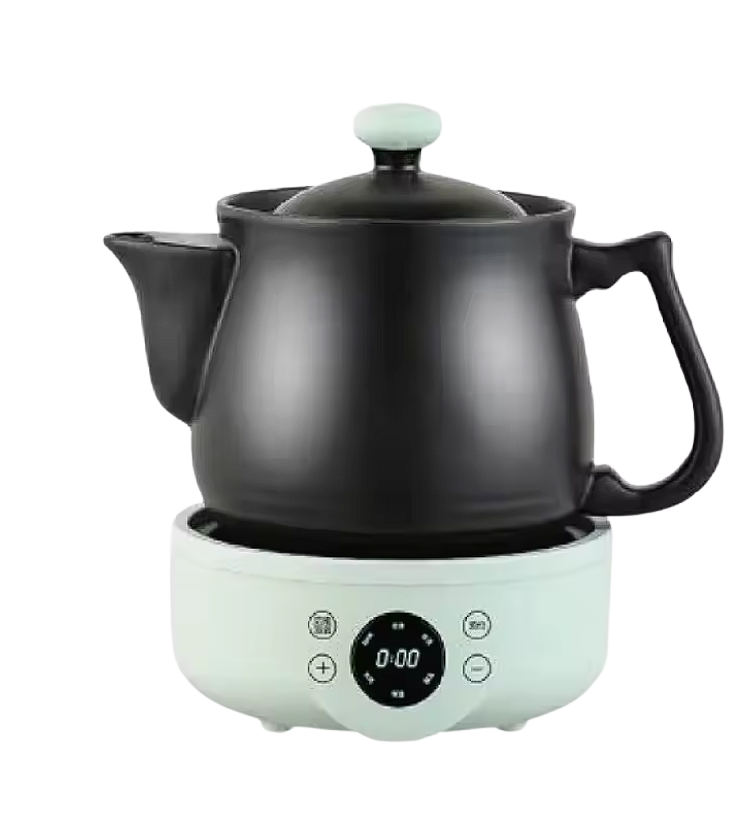
Ceramic (and related clay or earthenware) has long been preferred for herbal decoction because it is chemically stable. Official TCM guidance and traditional practice consistently recommend ceramic or clay vessels over iron, copper, or aluminum. Reactive metals can interact with tannins, alkaloids, organic acids, and other compounds in plant material, potentially altering color, taste, or efficacy and, in some cases, introducing unwanted metallic ions. A high-quality ceramic pot avoids this contact while distributing heat evenly and retaining it well. The result is a controlled, gentle extraction rather than a violent boil that can drive off volatile oils or scorch denser roots and barks. For a culinary shaman or herbal practitioner, this means the “essence” of the plants, whether understood pharmacologically, energetically, or both, is more faithfully transferred into the liquid.
The multifunctionality matters. One device handles:
- Long herbal decoctions (the core medicinal use)
- Nutrient-dense soups and bone broths that serve as both food and medicine
- Soft porridges suitable for the convalescent, the elderly, or ritual offerings that must be easily digestible
- Keep-warm service so a preparation remains ready without continuous monitoring or reheating that might degrade compounds
The appointment timer and automatic keep-warm functions align with the practical realities of this work. Traditional decoctions often require hours of low simmering after an initial higher heat phase, plus pre-soaking. A practitioner can load herbs and water, set a delayed start, and return to a finished preparation that has transitioned into a stable warm hold. This reduces the need for constant presence at the stove while still honoring the requirement for slow, careful extraction. In a practice that may involve multiple simultaneous preparations, client timing, or overnight processes, the reliability of the electric control is more than convenience, it protects the integrity of the work.
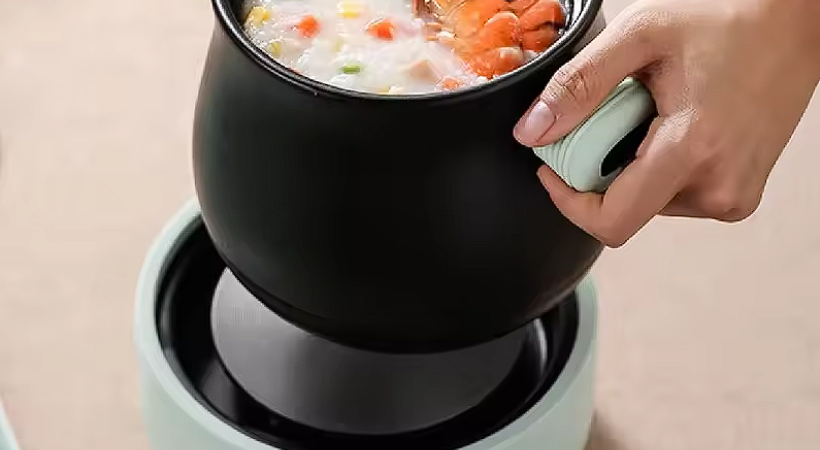
The split design further supports both hygiene and ritual sensibility. The ceramic vessel can be lifted free of the base for thorough washing (essential when moving between different herbal formulas so residual compounds do not cross-contaminate), for pouring without maneuvering a hot electrical unit, and for treating the pot itself as a dedicated tool rather than an ordinary kitchen appliance. In many traditional frameworks, the pot is the site where water, fire, and plant material meet and change. Separating the heating element from the vessel keeps the “sacred” or specialized container clean and focused.
Compared with a standard slow cooker (often metal or coated) or a stovetop pot that demands continuous attention, this appliance is specialized for the exact thermal and material conditions that herbal and restorative cooking require. It is small enough for individual or small-batch work yet large enough for meaningful preparations. It is quiet enough for overnight or daytime use without disruption. And it modernizes the traditional preference for ceramic without abandoning the principles that made ceramic preferred in the first place.
For anyone whose kitchen practice blends culinary skill with medicinal or ceremonial intent—preparing decoctions that must be pure, soups that must nourish deeply, and foods that must arrive at the right moment in a gentle, ready state, this style of electric ceramic stew pot is not a general gadget. It is a purpose-built tool that reduces friction around the most technical and time-sensitive parts of the work while remaining faithful to the material and thermal conditions the plants and the tradition demand. In that sense it is both highly specialized and unusually useful.
For anyone whose kitchen practice blends culinary skill with medicinal or ceremonial intent—preparing decoctions that must be pure, soups that must nourish deeply, and foods that must arrive at the right moment in a gentle, ready state, this style of electric ceramic stew pot is not a general gadget. It is a purpose-built tool that reduces friction around the most technical and time-sensitive parts of the work while remaining faithful to the material and thermal conditions the plants and the tradition demand. In that sense it is both highly specialized and unusually useful.